Introduction
On the auspicious day of Lord Ram’s consecration ceremony at the Ayodhya Temple on January 22, 2024, Prime Minister Mr. Narendra Modi announced PM Suryodaya Yojana 2024. The scheme was later renamed to PM Surya Ghar: Muft Bijli Yojana and launched on February 13, 2024, with a total allocation of Rs. 75,021 crore (~US$ 9 billion).
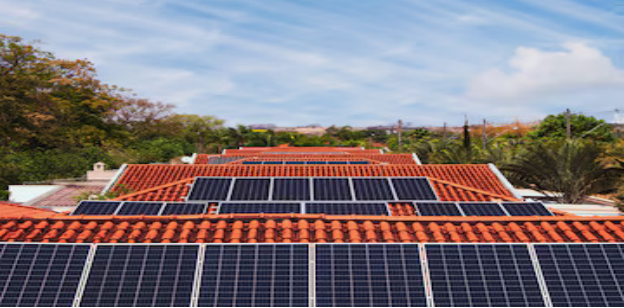
This ambitious project aims to install solar panels on one crore houses to generate electricity from solar energy. It will reduce the electricity expenditure of middle-class and poor households and make them self-sufficient in their energy requirements.
Installing solar panels on the rooftop will help these families to get up to 300 units of electricity-free every month. They will also earn Rs. 17,000-18,000 (~US$ 204-216) per annum by selling the extra electricity produced from these solar panels.
Need for PM Surya Ghar Yojana
India is the world’s third-largest energy consumer and ranks third in solar power producer. The solar energy capacity in the country has increased by 30 times over the last 9 years and stands at 119.02 GW as of July 2025. Through PM Surya Ghar Yojana, the government plans to promote the use solar energy.
Installing the rooftop solar panels on one crore houses will help in reducing country’s dependency on fossil fuel-based electricity. It will also make the maximum use of the sunshine which is available for 6-8 months of the year in most parts of the country.
The scheme will speed up the adoption of sustainable energy in India and help in achieving its promises at COP26, which are:
- Reach 500 GW of renewable energy capacity by 2030
- Meet 50% of its energy requirement through renewable sources by 2030
- Cut the total estimated carbon emissions by 1 billion tonnes till 2030
- Bring down the carbon intensity of the economy by under 45%
- Become a net zero carbon nation by 2070
Benefits of the scheme
- It will produce an additional 30 GW of solar capacity through rooftop solar installations
- Expected to produce 1,000 billion units (BUs) of electricity and reduce 720 million tonnes of carbon dioxide equivalent emissions over the 25-year lifetime of the rooftop systems
- Create approximately 17 lakh direct jobs in manufacturing, logistics & supply chain, operations & maintenance, and other services
- Enable beneficiaries to save on their electricity bills
- Help them earn additional income by selling the surplus power to Distribution Companies (DISCOMs)
- Help India fight climate change and establish a strong position in renewable energy space
Features of the scheme
- The newly announced PM Suryodaya Yojana aims to enable households to save Rs.15,000-18,000 (US$ 180-216) annually through rooftop solar installations, providing up to 300 units of free electricity monthly for one crore households. The initiative is expected to foster entrepreneurship in the solar sector, create job opportunities for skilled youth, and significantly contribute to sustainable energy practices, while also supporting the government's broader renewable energy targets with a budget allocation of Rs. 10,000 crore (US$ 1.20 billion) for FY25.
- Roof top solar panels will be installed in one crore households and provide free electricity up to 300 units every month.
- The scheme will provide a central financial assistance (CFA) of 60% of system cost for 2 KW systems and 40% of additional system cost for systems between 2 to 3 KW capacity.
- Based on current standard prices, this translates to Rs. 30,000 (~US$ 360) subsidy for 1 kW system, Rs. 60,000 (~US$ 720) for 2 kW systems and Rs. 78,000 (~US$ 935) for 3 kW systems or higher.
- Households will be able to access low-interest loan products of around 7% without any collateral for installation of residential RTS systems up to 3 kW.
- A Model Solar Village will be developed in each district of the country to act as a role model for adoption of rooftop solar in rural areas.
- India will move towards sustainable energy production and create earning and employment opportunities through this scheme.
Eligibility criteria
To avail the scheme, following criteria’s must be fulfilled by the applicants:
- Must be a citizen of India
- Must own a house with a roof suitable for installing solar panels
- Must have a valid electricity connection
- Must not have availed any other subsidy for solar panels
Application process to avail the subsidy
Following are the steps to avail the subsidy:
- Register on the national portal at www.pmsuryaghar.gov.in
- Select the State of residence and Electricity Distribution Company
- Enter the Electricity Consumer Number, Mobile Number and Email
- Login with Consumer Number and Mobile Number
- Apply for the Rooftop Solar as per the form
- Once the feasibility approval is provided, get the plant installed by any of the registered vendors
- Submit the plant details and apply for net meter once installation is completed.
- After installation of net meter and inspection by DISCOM, a commissioning certificate will be generated from the portal
- After receiving the commissioning report, applicant should submit the bank account details and a cancelled cheque through the portal
- The applicant will receive the subsidy within 30 days into their bank account after submitting these details
Recent Developments
- Under the Union Budget 2026-27, the Government allocated Rs. 22,000 crore (US$ 2.44 billion) for the PM Surya Ghar: Muft Bijli Yojana, compared with the revised estimate of Rs. 17,000 crore (US$ 1.95 billion) in FY26. The allocation reflects the government’s continued focus on accelerating rooftop solar adoption and expanding access to clean energy for households across the country.
- As of May 2026, under the PM Surya Ghar: Muft Bijli Yojana, a total of 60.95 lakh applications had been received, with 31.38 lakh rooftop solar installations completed across the country. The scheme had covered 38.40 lakh households with a cumulative installed capacity of 11,335.27 MW.
- As of September 2025, over 5.79 lakh loans worth Rs. 10,907 crore (US$ 1.24 billion) have been sanctioned under the PM Surya Ghar Muft Bijli Yojana, enabling rooftop solar adoption through easy, collateral-free loans processed digitally via the JanSamarth Portal.
- PMSGMBY, the world’s largest domestic rooftop solar initiative, has achieved a historic milestone with 10 lakh homes now solar powered as of March 10, 2025.
- As of March 2025, the scheme has seen remarkable progress across several states. Notably, Chandigarh and Daman & Diu have achieved 100% of their government building rooftop solar targets, leading the nation in clean energy adoption. States like Rajasthan, Maharashtra, Gujarat, and Tamil Nadu are also performing exceptionally well, contributing significantly to the overall installation figures. The Government is actively monitoring the progress across all states to ensure the smooth and timely execution of the scheme, with the goal of reaching 1 crore households by 2026-27.
Conclusion
The launch of PM Surya Ghar: Muft Bijli Yojana demonstrates the Indian government’s commitment to make a shift towards sustainable energy and energy empowerment in India. This scheme focuses powering one crore households belonging to poor or middle-class category by providing rooftop solar panels. This initiative will not only help in decreasing the expenditure on basic electricity needs of these families but will also drive self-sufficiency in energy creation. As India is making moves towards meeting its ambitious target of 500 GW of non-fossil fuel-based energy by 2030, PM Surya Ghar signifies a vital step in leveraging use of solar power to reduce energy challenges and encouraging sustainable development.
Partners